.png)
How to Age in Place Safely: A Room-by-Room Guide
Table of Contents
- What Aging in Place Means and Why It Matters
- Assessing Your Home for Aging in Place Safety
- Home Safety Checklist for Seniors: Room-by-Room Assessment
- Bathroom Modifications for Elderly Independence
- Fall Prevention and Hazard Reduction
- Medicare Coverage for Home Accessibility Solutions
- Creating Your Personalized Aging in Place Action Plan
- Frequently Asked Questions
Last Updated: October 9, 2026
What Aging in Place Means and Why It Matters
Aging in place safely means staying in your own home as you grow older while maintaining independence, comfort, and security.
The real advantage isn't just emotional, it's practical. According to CDC data on fall-related injuries in older adults, one in four adults aged 65 and older experiences a fall each year, making home safety assessment the foundation of any aging-in-place plan.
The most successful transformations start with a clear assessment. Your bathroom is almost always the priority, it's where falls happen most and where modifications deliver the biggest safety gains.
Assessing Your Home for Aging in Place Safety
Before committing to modifications, evaluate your home's safety gaps honestly. This isn't about fixing everything at once, it's about identifying which hazards pose the highest risk and which changes most improve your ability to age in place safely.
Walk through your home as if seeing it for the first time. Notice where you move slowly, grab walls for balance, or find poor lighting and clutter. These observations matter more than any checklist because they reflect your daily experience.
Ask yourself: Can you safely enter and exit your home? Navigate hallways without tripping? Use your bathroom without fear of falling? Manage stairs, or would a main-floor bedroom be better? The answers determine your priorities.
Home Safety Checklist for Seniors: Room-by-Room Assessment
A room-by-room assessment prevents you from missing critical hazards, since each space presents different risks.
Bathrooms: The Highest-Risk Area
Bathrooms are where most falls happen, wet surfaces, hard fixtures, and balancing while undressing or using the toilet create a perfect storm of risk. If you modify only one room to age in place safely, make it your bathroom.
Critical hazards include slippery surfaces, missing grab bars, poor lighting, high step-over tubs, and low toilets. Non-slip flooring is essential, grab bars must be installed into wall studs (not surface-mounted), and lighting should eliminate shadows.
All County One Day Bath specializes in accessible bathroom transformations that address these risks. Walk-in showers with therapeutic tubs can be installed in as little as one day using non-porous high-tech polymer materials for beautiful, easy-to-clean surfaces, a bathroom that works for aging in place safely without weeks of disruption.

Bedrooms and Living Spaces
Bedrooms and living areas should be clutter-free with clear pathways from bed to door to bathroom. Remove throw rugs, electrical cords, and furniture that juts into walkways.
Lighting is critical: keep bedside lamps within arm's reach, add nightlights in the bedroom and hallway, use motion-activated hallway lights, and make switches easy to find in the dark.
Bedroom furniture should be sturdy enough to steady yourself on. Avoid low beds, a bed at knee height makes standing easier. Keep a phone within reach for emergencies.
Kitchens and Stairs
Kitchens need clear counter space and accessible storage: keep daily items at waist to eye level, not on high shelves or in low cabinets. Non-slip flooring matters here too, especially near the sink.
Stairs are a significant fall risk for anyone with balance or mobility concerns. If possible, set up a bedroom and bathroom on the main floor. If stairs are unavoidable, install handrails on both sides, paint step edges with contrasting color, ensure adequate lighting, and consider a stair lift if climbing becomes unsafe.
Bathroom Modifications for Elderly Independence
For aging in place safely, your bathroom is where modifications deliver the most immediate safety gains, letting you maintain independence while reducing fall risk.
Grab bars are non-negotiable and must be installed into wall studs, not just surface-mounted.
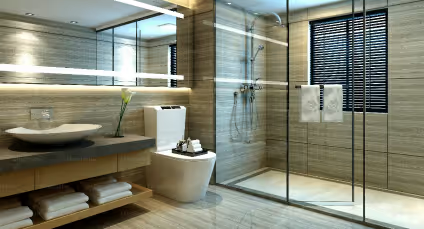
Walk-in showers eliminate the dangerous step-over of a traditional tub, a curbless or low-threshold entry is safer than any tub.
Lighting matters more in bathrooms than anywhere else: task lighting around the mirror, ambient lighting that eliminates dark corners, and dimmer switches to avoid harsh glare on wet surfaces.
All County One Day Bath transforms bathrooms into safe, accessible spaces using durable, easy-to-clean polymer materials.
Fall Prevention and Hazard Reduction
Falls are the leading cause of injury-related death for older adults (the CDC). Most happen at home and most are preventable. A comprehensive strategy addresses three things: your environment, your physical condition, and your awareness.
Improve your footwear: wear non-slip soles indoors, avoid socks on hard floors, and skip long pants that drag and obscure your feet.
Address balance and strength through movement: walking, gentle strength training, and balance exercises reduce fall risk significantly, even standing on one foot while brushing your teeth improves stability.
Review your medications with your doctor, since some affect balance or cause dizziness; doses or timing may be adjusted to reduce fall risk.
Medicare Coverage for Home Accessibility Solutions
Most people assume home modifications for aging in place safely aren't covered by Medicare. The reality is more nuanced, and understanding what is and isn't covered can save you thousands.
What Medicare doesn't cover: Structural modifications like bathroom remodels, ramps, doorway widening, stair lifts, and walk-in tubs generally aren't covered because they're home improvements, not medical equipment.
Medicaid and state programs: State Medicaid programs may cover home modifications through Home and Community-Based Services (HCBS) waivers, designed to help people stay home rather than move to nursing facilities.
Veterans benefits: The VA offers several programs. The Home Improvements and Structural Alterations (HISA) grant provides up to $6,800 for service-connected conditions and up to $2,000 for non-service-connected conditions (Prosthetic & Sensory Aids Service (PSAS)).
Other funding sources: The National Council on Aging's BenefitsCheckUp tool can help you find state and local programs that fund home modifications.
Cost ranges for common modifications: While prices vary by region and contractor, here are typical ranges you might encounter:
- Grab bar installation: $100-$300 per bar (including labor)
- Walk-in shower conversion: $3,000-$15,000
- Walk-in tub: $5,000-$20,000
- Stair lift: $3,000-$12,000
- Wheelchair ramp: $1,500-$15,000
- Doorway widening: $500-$2,500 per door
- Non-slip flooring: $1,000-$5,000 per room
Creating Your Personalized Aging in Place Action Plan
A successful aging-in-place strategy is personalized, not a generic checklist. Your action plan should reflect your mobility level, health conditions, home layout, and budget, and it should be sequenced, so you know what to fix first, what can wait, and when your needs have changed.
Step 1: Assess Your Current Abilities and Risks
Start by honestly evaluating your functional status. Ask yourself:
- Can I stand from a seated position without using my arms?
- Can I step over a 6-inch threshold without holding on?
- Can I see clearly at night walking to the bathroom?
- Do I feel steady on stairs?
- Have I fallen or nearly fallen in the past year?
If you answer "no" or "sometimes" to any, that area becomes a priority. Also consider diagnosed conditions, arthritis, Parkinson's, multiple sclerosis, stroke recovery, vision or hearing loss, cognitive impairment, since each changes which modifications matter most.
Step 2: Prioritize by Risk and Impact
Not all modifications are equal. Use this urgency framework:
Urgent (address within 30 days):
- Bathroom grab bars and non-slip surfaces, falls here are common and serious
- Removing throw rugs and securing cords in walkways
- Adding nightlights in bedrooms, hallways, and bathrooms
- Clearing clutter from stairs and pathways
- Ensuring a phone is reachable from bed and bathroom
High priority (address within 3-6 months):
- Walk-in shower or tub conversion
- Raised toilet seat or comfort-height toilet
- Handrails on both sides of stairs
- Improved lighting in kitchen, stairs, and entryways
- Bed at knee height for easier standing
Medium priority (address within 6-12 months):
- Stair lift if stairs are unavoidable
- Wheelchair ramp or threshold ramps
- Doorway widening for walker or wheelchair access
- Smart-home devices (voice assistants, automatic lights, medical alerts)
- Kitchen modifications (pull-out shelves, accessible storage)
Lower priority (address as budget allows):
- Full bathroom remodel with curbless shower
- Whole-home automation systems
- Elevator or residential lift
Step 3: Match Modifications to Specific Needs
Different conditions require different approaches:
Vision loss: Increase lighting everywhere, use high-contrast colors on stairs and edges, install motion-sensor lights, label appliances with tactile markers, and keep pathways completely clear.
Hearing loss: Install visual doorbells and phone alerts, use vibration-based alarm clocks, and consider a medical alert system with text or vibration notifications.
Dementia or cognitive decline: Simplify layouts, remove locks from interior doors, install door alarms, use automatic shut-off devices on stoves, and create a safe wandering path if needed.
Wheelchair or walker use: Widen doorways to at least 32 inches, install ramps with proper slope (1:12 ratio), lower countertops and sinks, create a roll-in shower, and ensure turning radius of at least 5 feet in bathrooms and kitchens.
Arthritis or grip weakness: Use lever-style door handles, touchless faucets, pull-out drawers instead of cabinets, and lightweight utensils and dishes.
Step 4: Set a Realistic Budget and Timeline
You don't need to do everything at once. Start with the highest-risk areas: a one-day bathroom transformation from All County One Day Bath addresses the room where falls happen most, followed by stair safety, lighting, and decluttering.
Set a budget separating urgent safety fixes from longer-term upgrades, and explore financing, All County One Day Bath offers flexible financing, including options with no money down and zero percent APR, so cost doesn't delay critical safety improvements. Get multiple quotes and always verify licensing and insurance.
Step 5: Document and Share Your Plan
Write down your action plan, what you've done, what's next, who to contact, and share it with family and caregivers, including emergency contacts, medical information, and advance directives.
Step 6: Reassess Regularly
Aging in place safely isn't static, it's an ongoing process of assessment and adjustment. Reassess formally every 6-12 months, or sooner if you notice warning signs:
- A new fall or near-fall
- Increased difficulty with daily activities (bathing, dressing, cooking)
- New diagnosis or medication affecting balance or cognition
- Weight loss or weakness that makes standing harder
- Forgetting medications or to turn off appliances
- Feeling unsafe or anxious at home
When these signs appear, revisit your plan, you may need to add modifications, bring in in-home care, or consider a different living arrangement. Stay ahead of changes rather than reacting to a crisis.
Frequently Asked Questions
Does Medicare cover home modifications for aging in place?
Medicare Part B covers some durable medical equipment like grab bars and raised toilet seats when prescribed by a doctor, but coverage is limited. Home structural modifications, bathroom renovations, and accessibility upgrades are typically not covered by Medicare. Medicaid varies by state and may cover some modifications under certain conditions. Veterans may qualify for grants through the VA. Contact your insurance provider and local Area Agency on Aging to explore available programs and funding options for your specific situation.
What are the most important home safety modifications for seniors?
The highest-priority modifications focus on fall prevention and bathroom safety. Install grab bars in bathrooms near toilets and showers, add non-slip flooring, improve lighting throughout the home, remove throw rugs and clutter from pathways, and ensure stairs have secure handrails. In bathrooms, walk-in showers and accessible fixtures significantly reduce injury risk. Bedroom modifications include accessible lighting, sturdy furniture for support, and clear pathways to exits. Address mobility barriers first, then work through other rooms systematically based on your specific needs and activities of daily living.
How can I assess my home for aging in place safety?
Start with a room-by-room walkthrough, evaluating lighting, flooring hazards, accessibility, and grab bar placement. Check for adequate handrails on stairs, clear pathways without clutter or throw rugs, and accessible bathroom fixtures. Test light switches for ease of use, evaluate doorway widths for mobility devices, and identify areas where balance support is needed. Consider your specific mobility, vision, and hearing needs. Document findings with photos and notes. Many local Area Agencies on Aging offer free or low-cost home safety assessments. If you have limited mobility or cognitive changes, involve a caregiver or occupational therapist in the evaluation.
What percentage of seniors want to age in place?
Research indicates that most seniors strongly prefer to age in place in their own homes rather than move to assisted living or nursing facilities. This preference is driven by independence, familiarity with their environment, and desire to maintain quality of life. Aging in place requires proactive planning, safety modifications, and sometimes in-home care support. Starting early with accessibility upgrades and fall prevention strategies makes it more achievable. The goal is to create a safe, accessible home environment that supports your independence and activities of daily living for as long as possible.
- or call -
We will be reaching out to you shortly!